
Filtration & Separation Solutions
Embrace Ultimate Application Challenges of Filtration, Separation, and Purification Technology
TFT LCD Manufacturing Process
In the TFT-LCD array process, contaminants mainly come from the manufacturing process and the handling, packaging, transportation, and storage of glass substrates. The main contaminants include dust particles, fiber debris, oil stains such as mineral oil and grease, inorganic particles such as silicon dioxide, as well as residues, watermarks, fingerprints, etc., from the preparation and processing processes.
These contaminants directly impact the quality and economic benefits of the final product. Therefore, a complex cleaning process is required during production, and the cleaning solution can be discharged or recycled after filtration.
Feature-Tec Solutions
1. Cleaning process filtration
Before the production of glass substrates begins, it is necessary to remove foreign substances with physical, chemical, and electrical characteristics that can affect film formation, as well as dust, oil, and natural oxide particles that adhere to the surface of the substrate. This provides a clean film layer and a clean texture for subsequent production. In addition, it can also remove dust and foreign matter on the surface after film formation.
The cleaning process includes the following steps and the recommended product solutions by Feature-Tec are shown in the figure below:

2、Film formation process filtration
The film-forming process can be categorized into two main methods. The first method is sputtering metal film deposition, which involves bombarding the material's surface with charged particles. This process provides sufficient energy for the atoms to enter the gas phase and then deposit onto the surface of the workpiece. Inert gases, such as argon, are typically used in this method. The second method involves the deposition of non-metallic films using Chemical Vapor Deposition (CVD) technology. PECVD (Plasma Enhanced Chemical Vapor Deposition) is employed in this method, where a series of chemical reactions occur to produce a solid product that is then deposited onto the surface of the glass substrate. Electronic special gases like silane, phosphine, and nitrogen trifluoride are commonly used in this process.
No matter which method is used, it involves the supply of gas, and the electronic gas needs to be filtered before entering the equipment chamber to participate in the reaction to remove the pollutants trapped in the gas transportation. Gist ultrapure gas filters produced by Feature-Tec can be used to eliminate contamination in the gas.
3、Lithography process filtration
Photolithography process consists of four parts: washing, coating, exposure and development.
In the photolithography process of thin film transistors, each step may introduce harmful particle contamination, microbubble void defects and metal contamination on the surface of the glass substrate, so the cleaning process is essential.
Coating, exposure, and development are crucial steps in lithography. During this process, a light-sensitive photoresist is coated onto a glass substrate. The photoresist is then selectively sensitized through the shading effect of a mask plate. Afterward, a developer, commonly quaternary ammonium hydroxide (TMAH) solution, is used to remove the unsensitized photoresist, leaving behind only the cured areas.

4. Etching Process Filtration
The etching process is used to remove the film layer that is not masked by photoresist in order to obtain the same pattern on both the film and the photoresist. There are two methods of etching: wet etching and dry etching. Wet etching involves using a solution with chemical reactions, while dry etching utilizes gas and plasma technology for material etching.
During the wet etching process, the glass substrate undergoes etching in a specialized tank. Subsequently, it is thoroughly cleaned in a water washing tank before moving on to the final step of dry processing. The process and the use of Feature-Tec solution are illustrated below:

5. Stripping process filtration
In the manufacturing of flat panel displays, after the film deposition, photolithography, and etching processes, it is necessary to remove the residual photoresist to complete the film layer. The glass substrate is immersed in a stripping solution in a stripping tank, which softens the photoresist. The stripping solution is then replaced by IPA, followed by washing in a water washing tank and finally drying.

Feature-Tec Products
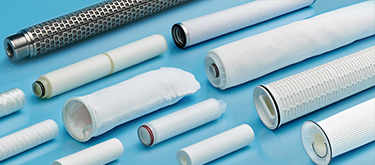
In the TFT-LCD array process, Feature-Tec products are used in various stages. Here is a detailed introduction to each series:
Taurus Series
The Taurus series filter element utilizes a PTFE filter membrane that has excellent chemical compatibility. It is suitable for the filtration and purification of diluted acids, alkalis, solvents, deionized water, and more. The unique folding technology ensures high retention efficiency while maintaining high flux and low resistance, thus prolonging the product's service life. Taurus series cartridges are available with hydrophilic and hydrophobic membranes, eliminating the need for pre-wetting and reducing startup time, resulting in cost savings.
Peasic Series
Peasic cartridges are made of high purity PP material and asymmetric polyethersulfone membranes. They offer advantages such as high flux, low resistance, high dirt-holding capacity, and low metal ion precipitation. These features make them ideal for filtration in the microelectronics industry, including the filtration of dilute acids, alkalis, and deionized water. The natural hydrophilicity of polyethersulfone eliminates the need for pre-wetting treatment, reduces cartridge replacement time, and improves equipment uptime.
EL Series
EL cartridges are made of high purity PP resin and are cleaned with ultrapure water. This effectively controls ion precipitation issues. Additionally, the polypropylene material has a wide range of chemical compatibility, making it suitable for most acid and alkali solutions.
EG Series
EG series filter elements are made of hydrophobic PTFE microporous membrane material. They offer ultra-high filtration precision, low differential pressure, high flow rate, and long service life. These filter elements are ideal for bulk gas filtration, gas filtration, tank top breathing filtration, and other applications.
Gist Ultrapure Gas Filter
The Gist ultrapure gas filter is specifically designed for the ultrapure purification of electronic-grade gases. It has a filtration precision of up to 3nm and offers advantages such as high flux, low pressure loss, and good chemical compatibility. The compact structure and high strength of the equipment make it suitable for high-temperature and high-pressure gas filtration applications as well.
Related Solutions
Related components
Related Equipment
Message consultation
Contact
Hotline: (+86)400-820-6150
Email: marketing@feature-tec.com
Address: 8/F, Block A, Building 3, Tianhua Information Technology Park, 299 Longcao Road, Xuhui District, Shanghai
